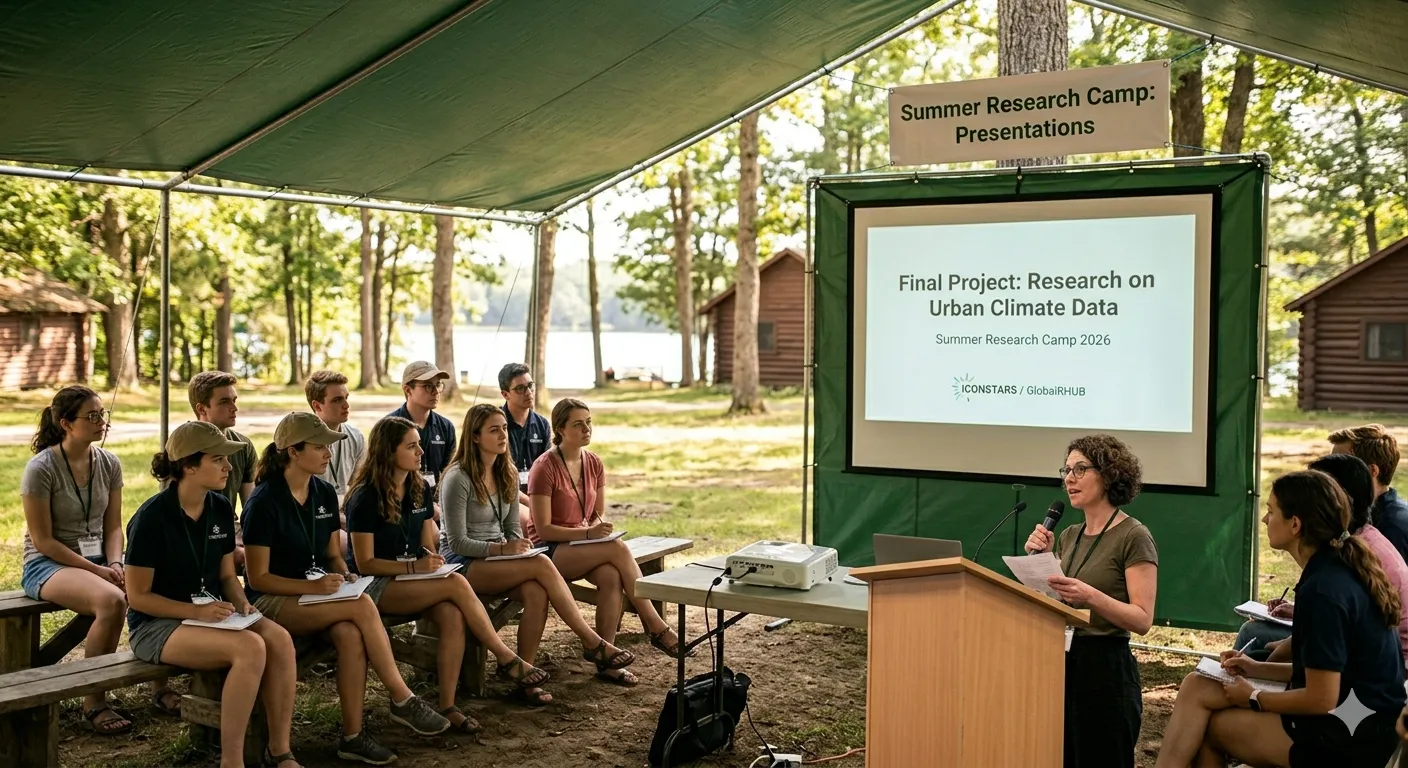

25 Capstone Project Ideas for High School Students (2026 Guide)
What Exactly Is a Capstone Project?
A capstone project is a long-term, self-directed piece of work that lets a student apply everything they've learned to a single, in-depth topic. Unlike a two-week class assignment, a capstone typically spans several months and pushes you to combine research, critical thinking, and real-world problem-solving into one final product — a paper, prototype, presentation, or performance.
According to the Glossary of Education Reform, capstone projects are often described as a "culminating academic experience," designed specifically to counter the drop in engagement many students feel during their final year of school.
→ Learn more about Glossary of Education Reform
Why Capstone Projects Matter for College Applications
Admissions officers increasingly look for evidence that a student can manage an independent, long-term project — not just good grades. Strong capstone projects demonstrate a student's ability to design and lead a meaningful project with measurable, real-world impact.
A well-chosen capstone can help you:
- Stand out in a competitive applicant pool by showing initiative beyond the classroom
- Build transferable skills — research, data analysis, communication, and time management
- Create a talking point for essays, interviews, and letters of recommendation
- Explore a potential college major or career path before committing to it
→ If you want structured, mentor-led guidance rather than figuring it out solo, programs like the High School Scholar Program pair students with PhD mentors to turn a capstone idea into a publishable research paper.
How to Choose the Right Capstone Topic (Before You Pick an Idea)
Before jumping into a list of ideas, run your topic through these four filters:
- Genuine curiosity – You'll be living with this topic for months; pick something you'd research even without a grade attached.
- Feasibility – Do you have access to the tools, mentors, or data you'll need?
- Depth over breadth – A narrow, well-explored question beats a broad, shallow one.
- A clear final output – Know upfront whether you're producing a paper, a prototype, a campaign, or a performance.
→ If you're unsure where your interests intersect with a workable project scope, browsing a structured idea bank — like this research project ideas library — can help narrow things down faster than a generic list.
STEM Capstone Project Ideas
- Build a Solar-Powered Charging Station — Design a small solar charger for phones or small devices; explore efficiency trade-offs between panel types.
- Design a Low-Cost Water Filtration System — Use sand, gravel, and activated carbon to test contaminant removal in local water samples.
- Study Microplastics in Local Water Sources — Collect and analyze water samples for microplastic contamination using basic filtration and microscopy.
- Create an AI Chatbot for a Specific Use Case — Use no-code or beginner tools to build a chatbot solving a real problem (e.g., study help, mental health check-ins).
- Compare Plant Growth Under Different Light Spectrums — Run a controlled experiment on LED vs. natural light and measure growth rate differences.
- Model the Physics of a Simple Machine — Build a working model (catapult, pulley system, or roller coaster) and calculate the physics behind it.
- Analyze Air Quality Data in Your City — Pull public air-quality datasets and identify pollution trends across neighborhoods or seasons.
Social Science & Data Projects
- Survey Teen Social Media Habits and Mental Health — Design a survey, collect responses, and run basic statistical analysis on the correlation.
- Analyze Traffic Safety Near Your School — Observe and log traffic patterns, then propose data-backed safety recommendations to local authorities.
- Research the Economic Impact of a Local Small Business Sector — Interview business owners and analyze how policy or market shifts affected them.
- Study the Effects of Sleep on Academic Performance — Use self-reported sleep logs and grades/test scores to explore correlation (with proper ethical safeguards).
- Examine Voting Behavior Among First-Time Voters — Survey peers on political engagement and compare with national youth voting trend data.
→ For students who want their social science project to go beyond a class presentation and into an actual publishable paper, the Research Paper Support Program walks through methodology, data analysis, and journal submission.
Humanities & Writing Projects
- Write and Compile a Short Story or Essay Collection — Build a themed collection around personal experience, identity, or community.
- Compare Folklore Across Two Cultures — Analyze recurring themes (justice, family, nature) in traditional stories from two different regions.
- Create a Podcast Series on a Historical Topic — Research and produce 4–6 episodes exploring an underrepresented historical event or figure.
- Design an Educational Card or Board Game — Build a game that teaches a specific subject (history, grammar, financial literacy) and test it with real players.
- Curate a Digital Museum Exhibit — Use free tools to build a virtual exhibit around an artist, movement, or historical event.
Business & Entrepreneurship Projects
- Launch a Micro-Business and Track Its First 90 Days — Start a small product or service business and document revenue, costs, and lessons learned.
- Design a Marketing Campaign for a Local Nonprofit — Create and (with permission) run a real social media or outreach campaign, then measure engagement.
- Analyze a Local Industry's Response to a Market Trend — Study how a specific sector (retail, food service, etc.) in your area adapted to a recent economic shift.
- Build a Financial Literacy Workshop for Peers — Design and deliver sessions teaching budgeting, saving, or investing basics to younger students.
Art, Design & Media Projects
- Design a Public Awareness Poster or Digital Campaign — Create visual content on a cause you care about and track its reach if shared online.
- Illustrate and Self-Publish a Children's Book — Write and illustrate a short story aimed at teaching a specific value or concept.
- Build a Personal Portfolio Website — Design a site showcasing your creative or academic work, useful for college and program applications.
- Produce a Short Documentary on a Community Issue — Interview stakeholders and edit footage into a short-form video with a clear narrative arc.
Common Mistakes Students Make With Capstone Projects
- Choosing a topic that's too broad to meaningfully cover in the available time
- Skipping the planning phase and jumping straight into execution
- Not building in mentor or teacher check-ins, leading to scope drift
- Treating the final product as an afterthought instead of planning it from day one
Want Expert Guidance Instead of Figuring It Out Alone?
If you'd rather work with a subject-matter mentor to turn your capstone into a research paper with real publication potential, explore Global R-Hub's programs, which pair students grades 6–12 with PhD faculty across disciplines like AI, biology, economics, and international relations. You can also check upcoming events and bootcamps or browse past blog posts for more project inspiration and application tips.
FAQs
How long should a high school capstone project take?
Most capstones run 3–6 months, though timelines vary by school requirements and project scope.
Do I need a mentor for a capstone project?
Not always, but a mentor significantly helps with feasibility, depth, and avoiding common research mistakes — especially for STEM or data-heavy topics.
Can a capstone project help with college admissions?
Yes — a well-executed, original project can differentiate your application and give you a strong personal narrative for essays and interviews.