
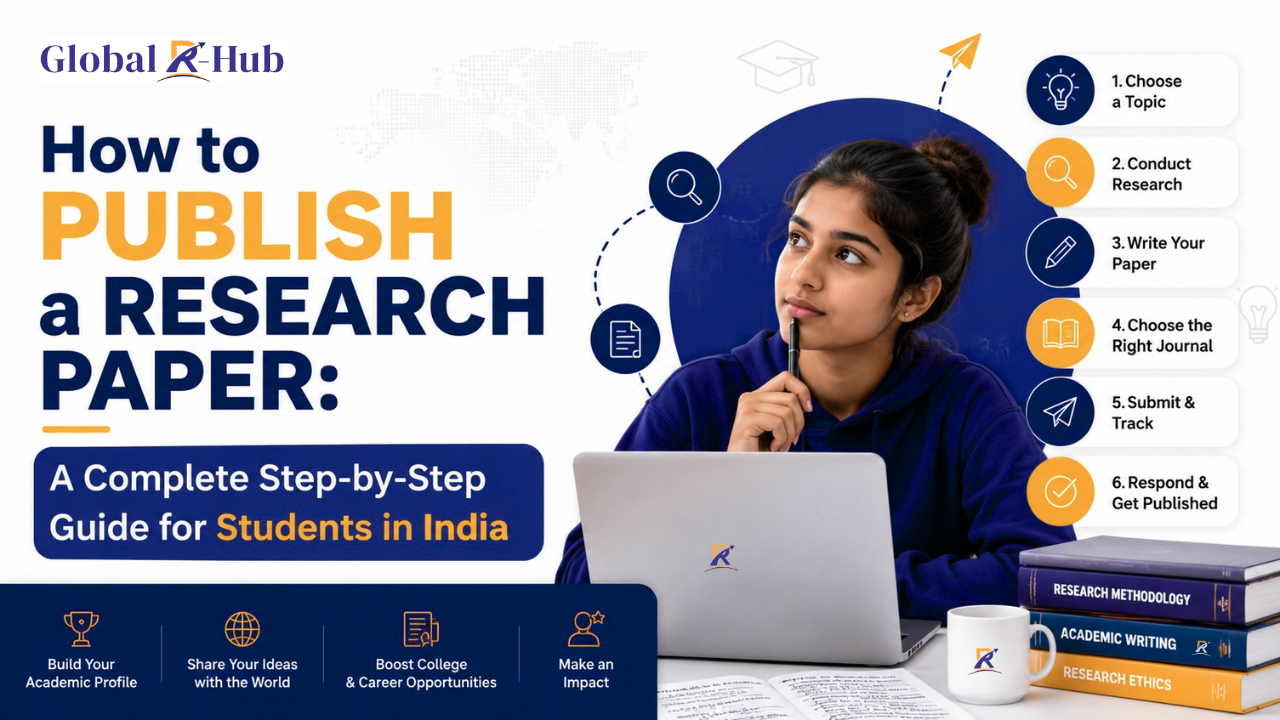
How to Publish a Research Paper: A Complete Step-by-Step Guide for Students in India
Publishing a research paper as a student may sound like something only PhD scholars or university professors do. However, every year, hundreds of school and college students in India publish their research in peer-reviewed journals, indexed journals, reputable open-access journals, and student research publications. Many also showcase their work at national and international conferences, strengthening their academic profile while connecting with researchers and experts from around the world.
If you are wondering how to publish a research paper, whether you are a Class 11 student working on a research project, an undergraduate conducting independent research, or someone aiming to strengthen your university application, this step-by-step guide covers everything you need to know.
From choosing a research question to selecting the perfect journal and navigating the peer-review process, this guide will help you understand every stage of the research publication journey.
→ Wondering if students can really publish research? Explore how 20+ Global R-Hub students made it happen
Why Should a Student Publish a Research Paper?
Before learning how to publish a research paper, it’s important to understand why publishing research can be a game-changer for students.
Publishing research offers far more than just another achievement on your resume. It demonstrates your ability to think critically, solve problems, and contribute original research, and contribute meaningful ideas to your chosen field.
Some of the biggest advantages include:
- Earning a peer-reviewed publication that adds credibility to your academic profile.
- Strengthening applications to top universities in India and prestigious international study programs.
- Demonstrating research aptitude through academic writing, data analysis, critical thinking, and problem-solving beyond academic grades, helping you stand out during admissions and interviews.
- Gaining opportunities to present your research paper at reputed national and international conferences such as the ISER International Conference, IGO Conference London, and similar academic events.
- Competing with some of the brightest young researchers in globally recognised competitions like IRIS National Fair, Regeneron ISEF, John Locke Essay Competition, and more.
- Building your academic footprint through published research, with the opportunity to earn citations as other researchers reference your work over time.
- Creating a strong academic profile that distinguishes you from your peers.
And the best part? You don’t always need to be enrolled in a university research lab or have work under a senior professor to get started. With the right topic, a systematic approach, and a proper mentorship, students can publish meaningful research independently.
→ Ready to publish your first research paper? Get 1:1 mentorship from experts at Global R-Hub
How to Publish a Research Paper: The Step-by-Step Process
Step 1: Define a Clear Research Question
Every published research paper begins with a well-defined research question, not just a broad topic. So, for example, instead of 'climate change,' as your topic, a stronger research question would be: 'How has the rate of deforestation in the Western Ghats changed between 2010 and 2023?'
A strong/good research question should be
- Specific
- Original
- Researchable
- And Feasible within your time, scope, and data resources.
It should clearly address a gap in existing literature, allowing your research to contribute something new rather than repeating what is already known.
Spending time refining your research question lays the foundation for every stage of the publication process, from conducting the literature review to selecting the right journal.
→ Looking for trendy research project ideas? Explore Global R-Hub's curated collection across diverse disciplines
Step 2: Conduct Your Research and Review Existing Literature
Before you begin writing your manuscript, spend time understanding what has already been published on your topic. A thorough literature review is one of the most important parts of the research process.
Use trusted academic databases such as:
- Google Scholar
- PubMed
- JSTOR
- Proquest
- Semantic Scholar
Reviewing previous studies helps you:
- Understand the current state of research in your subject.
- Identify gaps that your research can address.
- Build a strong academic foundation for your work
- Avoid duplicating existing research.
- Use AI ethically.
As you read, maintain detailed notes and keep track of your citations from the beginning. Organising references early will make writing and formatting your manuscript much easier later.
Step 3: Structure and Write Your Research Paper
Most peer-reviewed journals follow the internationally accepted IMRaD format. Structuring your manuscript correctly improves readability and makes I easier for editors and reviewers to evaluate your work.
- Abstract: A concise summary (150-250 words) covering your research question, methodology, major findings, and conclusion.
- Introduction: Introduce the background of your topic, explain the existing research, identify the knowledge gap, and clearly define your research objectives.
- Methods: Explain how you conducted your research so another researcher could replicate your study. Clearly describe your research methodology, whether it is qualitative, quantitative, or mixed methods—and specify your research design, such as exploratory, descriptive, analytical, or experimental. Also include details about data collection, sample selection, research tools, and data analysis techniques.
- Results: Present your findings clearly and objectively using tables, figures, graphs, charts, or statistical analysis, wherever appropriate. This section may include hypothesis test results, descriptive statistics, univariate, bivariate, or multivariate analysis, as well as data modelling or predictive analysis, depending on your research methodology. Save the interpretation of these findings for the Discussion section.
- Discussion: Interpret your findings, compare them with previous research, discuss their significance, and acknowledge any limitations.
- Conclusion: Summarise your key findings, answer your research question, and recommend areas for future research.
- References: Include every cited source using the citation style required by your target journal, such as APA, MLA, or Chicago.
- Final Checks: Before submitting your manuscript, run a plagiarism check to ensure originality and verify that all sources are properly cited. If you have used AI tools for writing, editing, or language improvement, ensure your manuscript complies with the journal's AI usage policy. Many journals require authors to disclose AI assistance, while others prohibit AI-generated content beyond language editing.
When writing a research paper for journal publication, remember that clarity is more important than complexity. Use active voice, write concise sentences, and explain technical terms the first time they appear. A well-structured manuscript significantly improves the chances of a smooth peer review process.
→ Need help with academic writing, editing, or manuscript preparation? Explore Global R-Hub's Research Support Program
Step 4: Choose the Right Journal
Choosing the right journal is just as important as writing a strong research paper. Even an excellent manuscript can face rejection if it is submitted to a journal that doesn’t match its scope or audience.
Before selecting a journal, consider the following key points:
- Does the journal publish research in your subject area?
- Is it a peer-reviewed indexed journal?
- Is the journal indexed in recognised academic databases?
- Does it accept submissions from school or undergraduate students?
- Does it clearly explain its submission guidelines and peer review process?
If you are publishing your first research paper, consider student-friendly journals like Journal of Emerging Investigators, Journal of Student Research, and Curieux Academic Journal, all of which welcome submissions from student researchers.
Important: Do NOT submit to predatory journals that promise quick publication in exchange for high publication fees without conducting proper peer review. Always verify the journal through the Directory of Open Access Journals (DOAJ) or the UGC-CARE list before submitting your manuscript.
→ Looking for authentic journals to publish your research? Explore Global R-Hub's curated Journal List
Step 5: Submit and Navigate Peer Review
Once you have selected the right journal, it’s time to submit your manuscript through the journal’s online submission system.
After submission, your research paper generally goes through the following stages:
- Technical screening: The journal verifies formatting, references, plagiarism, and submission requirements
- Editorial review: The editor decides if the paper is suitable for peer review.
- Peer review: 2-3 subject experts evaluate the quality of your research paper.
- Editorial Decision: The journal may accept the paper, request revisions, or decline the submission.
- Revision: Address each reviewer comment carefully through a point-by-point response letter and revise your manuscript accordingly.
- Publication: Once accepted, your research paper is scheduled for the publication.
The peer review process usually takes between 4 and 12 weeks, depending on the journal.
Remember, rejection is a normal part of academic publishing. Even experienced researchers receive reviewer comments and revise their work multiple times before publication. Treat every review as an opportunity to strengthen your research.
IMPORTANT: Submit your research paper to only one journal at a time. Sending the same manuscript to multiple journals simultaneously is considered unethical and may lead to immediate rejection.
How to Publish a Research Paper for Free
Many students assume that publishing research always involves expensive publication charges. Fortunately, there are several ways to publish a research paper for free.
- Open Access Journals: Many open access journals in the Directory of Open Access Journals (DOAJ) do not charge article processing charges (APCs), allowing students to submit and publish their research free of cost.
- Preprint Servers: Platforms such as arXiv, bioRxiv, and SSRN allow researchers to share their manuscripts publicly before formal peer review, making research accessible without any publication fee.
- Student-Specific Journals: Several student research publications, including the Journal of Emerging Investigators and Curieux Academic Journal, provide free submission opportunities for school and undergraduate students.
- Conference Proceedings: Many reputed academic conferences, including those published through IEEE and Springer, offer opportunities for students to publish their research through conference proceedings, sometimes without additional publication charges.
How to Get a Research Paper Published as a Student in India
Most online guides on how to get a research paper published are written for PhD scholars or university researchers. However, school and undergraduate students in India often follow a very different path.
Here are a few strategies that consistently improve your chances of publication:
- Start with Student-Friendly Journals: Rather than targeting highly competitive journals immediately, begin with the reputable student research publications that encourage submissions from school and undergraduate students while maintaining international academic standards.
- Work with an Experienced Research Mentor: A research mentor can guide you through every stage if the publication process, from selecting a research question and refining your research methodology to improving academic writing, choosing the right journal, and responding to reviewer comments.
→Want to publish your first research paper? Learn alongside Project Mentors from Top-Tier Universities at Global R-Hub
- Focus on Original Indian Research: Research based on Indian datasets, surveys, local case studies, or field observations often fills genuine gaps in existing literature and can make your manuscript more valuable to journals.
- Present Your Research Beyond Publication: Publishing your research paper is just one milestone. Students can also present their work at reputed conferences, build academic portfolios, and strengthen applications for higher education and scholarships.
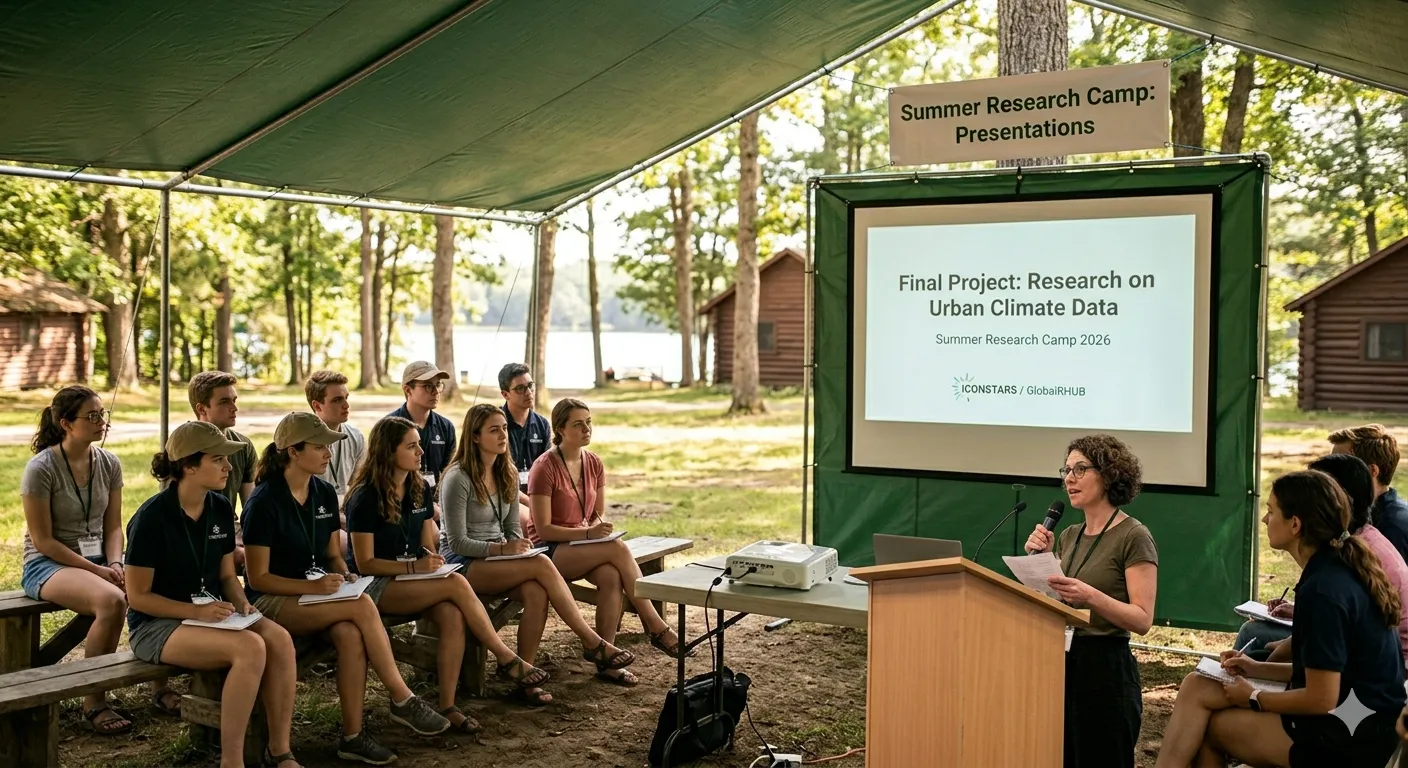
→Share your research with a global academic audience at ICONSTARS – International Conference for Student Academic Research
- Global R-Hub Insight: Students enrolled in Global R-Hub’s mentorship programs typically complete their first research paper within 3-6 months. Structured mentorship helps students avoid common mistakes in research design, academic writing, journal selection, and the peer review process, significantly improving their chances of publication.
→ Ready to publish your first research paper? Explore Global R-Hub's Research Scholar Programs
Ready to Publish Your First Research Paper?
Publishing your first research paper is a journey that requires curiosity, consistency, and the right guidance. From identifying a meaningful research question and conducting a thorough literature review to writing your manuscript, selecting the right peer-reviewed journal, and navigating the peer review process, every stage helps you grow as a researcher.
Many students abandon the publication process midway, not because they lack ability, but because they lack structured guidance and mentorship.
At Global R-Hub, students work one-on-one with experienced research mentors who support them throughout the complete publication process. From selecting a research topic to preparing a publication- ready manuscript and choosing the right journal, our mentors guide students at every step.
Our students have successfully published research across disciplines including economics, neuroscience, environmental science, artificial intelligence, psychology, and public policy, helping them build stronger academic profiles and stand out during university admissions.
→ Have a research idea? Talk to out mentors and start your research publication journey with Global R-Hub today. Apply now - https://globalrhub.org/
Frequently Asked Questions
Can a high school student publish a research paper?
Yes. Many peer-reviewed student journals and student research publications accept submissions specifically from high school students. Global R-Hub students have published research as early as Class 7.
How long does it take to publish a research paper?
The complete publication process, from selecting a research question to final publication, usually takes 4-9 months. The exact timeline depends on the complexity of the research, the chosen journal, and the duration of the peer review process.
Do I need a university affiliation to publish research?
No. Many open access journals and student journals accept submissions from independent researchers. What matters most is the quality of your research question, methodology, and writing, originality, and overall contribution, not your institutional affiliation.
Is it difficult to get a research paper published?
Publishing research requires dedication, patience, and a systematic approach. While the process can be challenging, choosing the right journal, writing a strong manuscript, and working with an experienced research mentor can significantly improve your chances of success.
How to write and publish a research paper as a student?
Start by identifying a focused research question, conducting a comprehensive literature review, writing your manuscript using the IMRAD structure, selecting a suitable peer-reviewed journal, and submitting your work through the journal’s online system. Be prepared to revise your manuscript based on reviewer feedback before publication. With structured mentorship and consistent effort, publishing your first research paper is an achievable goal.